The problem
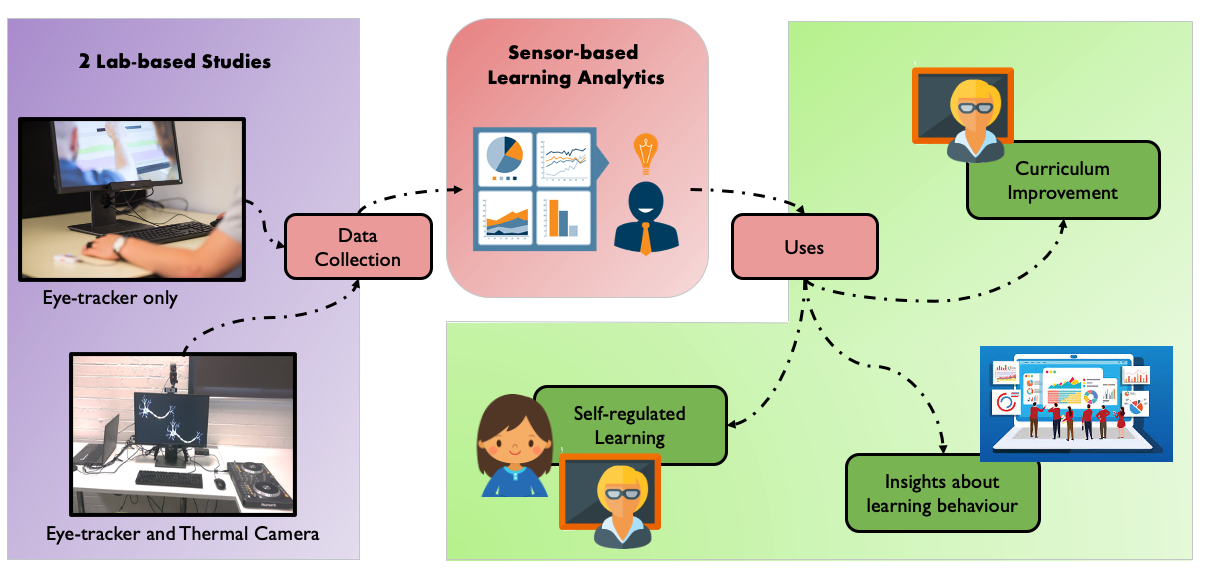
In online video lectures, teachers can't see when students are confused or overloaded. Asking students how they feel interrupts their learning, and click data says little about what they experience moment to moment.
What I did
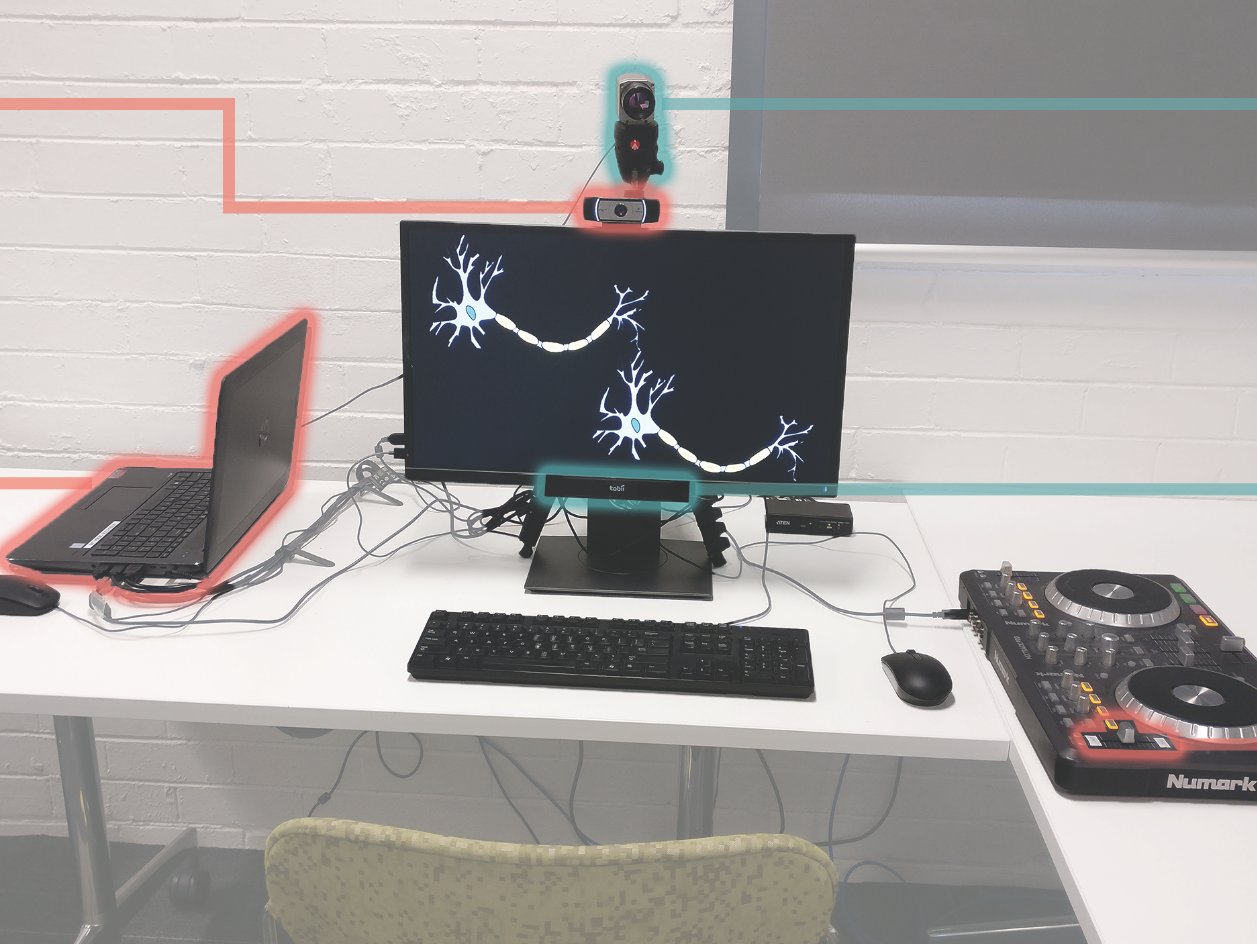
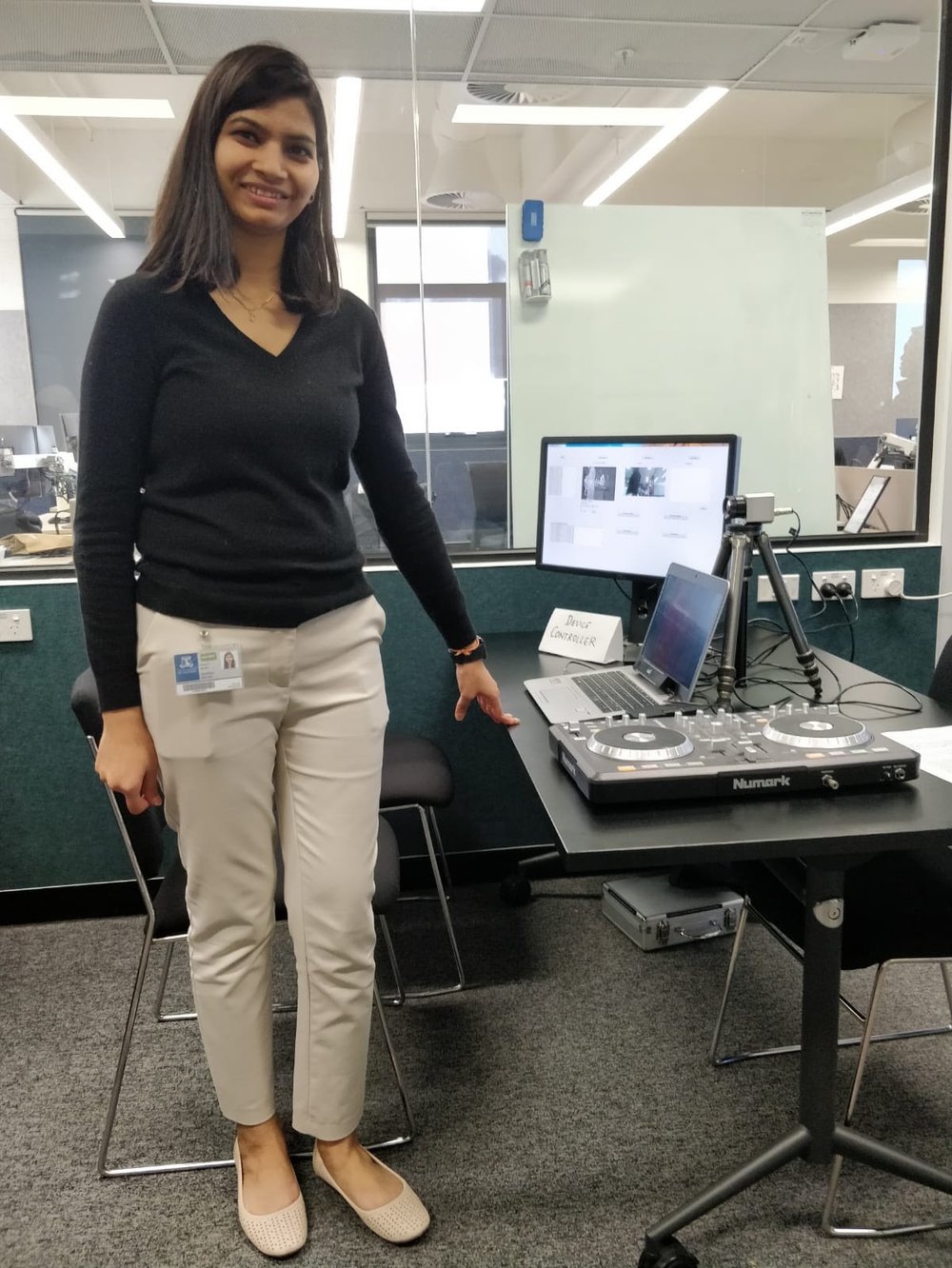
- Built a system that records students' eye movements and facial temperature in real time, without anything touching the learner.
- Ran two lab studies with 100 students watching video lectures.
- Engineered new gaze and thermal features, and used descriptive analytics, statistical inference, and machine learning to model students' cognitive load.
In the lab
What I found
Non-invasive sensors could predict students' cognitive load and point to the moments in a lecture where students struggled.
Why it matters
This work showed how sensors can act as an observation tool for learning, giving teachers and designers a view into what students experience. It also became the measurement foundation for my later learning analytics research.
Publications
- Continuous evaluation of video lectures from real-time difficulty self-report. CHI 2019
- Exploring the usage of thermal imaging for understanding video lecture designs and students' experiences. LAK 2020
- Are you with me? Measurement of learners' video-watching attention with eye tracking. LAK 2021
- Towards sensor-based learning analytics: a contactless approach. PhD thesis, 2021